 MediRec
1. Purpose
Access regulation is one of the critical bottlenecks in public health management. The volume of referrals, fragmented workflows, and the administrative burden on health professionals compromise both system efficiency and the quality of patient care. MediRec was created to address this challenge — integrating technology, listening to health professionals, and deep knowledge of SUS processes to transform regulation into an agile, traceable, and patient-centered flow.
The platform is built hand in hand: on one side, the 2BLP Futuro team; on the other, the Municipal Health Department itself — from central management to front-line operators. This co-construction process ensures that every feature responds to real day-to-day needs at the facilities, making MediRec not only a technological tool but a shared project for the continuous improvement of the health system.
2. MediRec
MediRec is a health management platform developed by 2BLP Futuro Ltda., focused on automating and optimizing access-regulation processes in the public health network. Conceived in close collaboration with health professionals, the solution was designed to adapt to the workflows already in place at the facilities, reducing the administrative burden and increasing the efficiency of patient care.
One of MediRec's central pillars is its native integration with SISREG — the Ministry of Health's National Regulation System. Through this integration, professionals submit referrals and counter-referrals directly through the platform, which synchronizes the information with SISREG in real time, eliminating duplicate data entry, reducing inconsistencies, and preserving the continuity of the care pathway.
Request quality is reinforced by an analysis mechanism based on the public health network's clinical protocols. At the time of registration, the system compares the clinical information entered by the professional with the criteria in the current protocols, guiding the professional on the referral's suitability even before it is sent to the regulator. This assisted process increases request compliance, reduces return rates and administrative rework, shortens patient waiting time, and supports the requesting professional's continuous clinical development.
Finally, MediRec identifies and tracks the teams responsible for each case and request, allowing it to automatically filter returned referrals and directly notify the team responsible for resolving them. Each team begins to receive, autonomously, alerts related to its own returns — with all the information needed to act immediately, without depending on administrative screening or intermediation. The result is a more agile, transparent, and patient-centered regulation network, with significant gains for professionals, managers, and, above all, those waiting for care.
In addition to SISREG, MediRec integrates the SER, GAL, SISCAN, SINAN Rio, and eSUS systems and laboratory test results, with future integration planned for HCI, the other SINAN systems, and SIPNI.
The results obtained with MediRec in the network's facilities demonstrate a concrete and measurable impact on care efficiency.
3. MediRec users
MediRec serves every professional profile at a health facility — physicians, nurses, pharmacists, health workers, dentists, technicians, administrative staff, NASF/eMulti teams, managers, and directors. Each user category accesses a set of features developed specifically for its responsibilities, viewing only the information relevant to its role. This segmented access model simultaneously ensures each professional's operational agility and compliance with the privacy and data-protection principles established by the LGPD.
MediRec is still in the implementation and expansion phase.
| Role | Number of operators |
|---|---|
| Community health workers | 4,275 |
| Administrative staff | 253 |
| Social action workers | 3 |
| Social workers | 12 |
| Oral health assistants | 23 |
| Dentists | 293 |
| Facility directors | 21 |
| eMulti | 79 |
| Nurses | 863 |
| Pharmacists | 11 |
| Physical therapists | 38 |
| Speech therapists | 4 |
| Facility managers | 218 |
| Requesting physicians | 946 |
| Nutritionists | 26 |
| Physical education professionals | 2 |
| Psychologists | 53 |
| Psychiatry | 2 |
| Regulators | 424 |
| Nursing technical leads - facility/CAP | 123 |
| Medical technical leads - facility/CAP | 238 |
| Nursing technicians | 232 |
| Pharmacy technicians | 10 |
| Oral health technicians | 21 |
4. Eight to twelve hours saved per physician
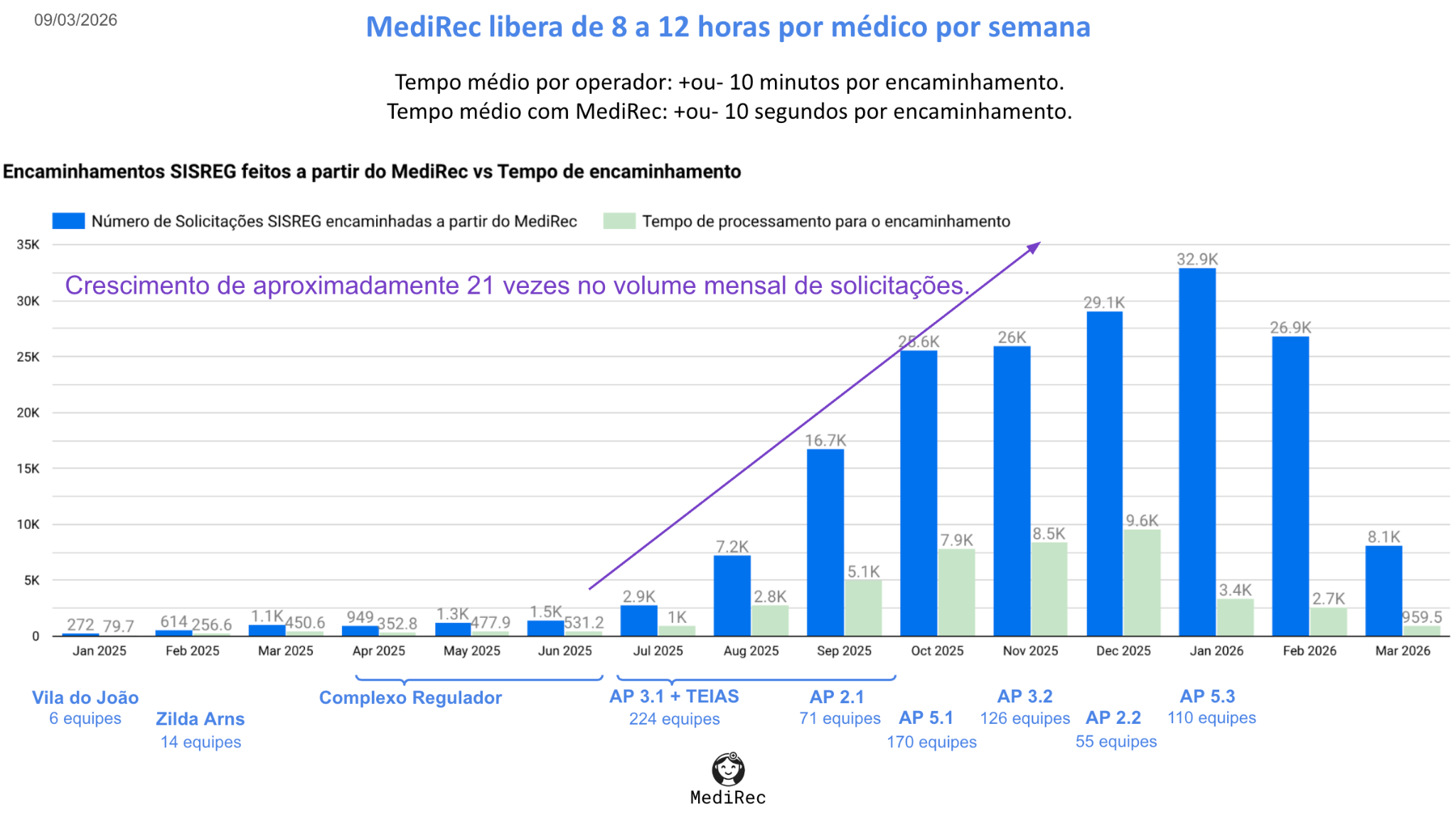
The SISREG module reduces referral time from 8 to 10 minutes per request to only 10 to 13 seconds — a reduction of more than 95% in the time dedicated to each entry. In practice, this represents savings of 8 to 12 hours per physician per week, varying according to request volume and the facility's level of care pressure.
5. An approximately 65% reduction in the returned-referral backlog
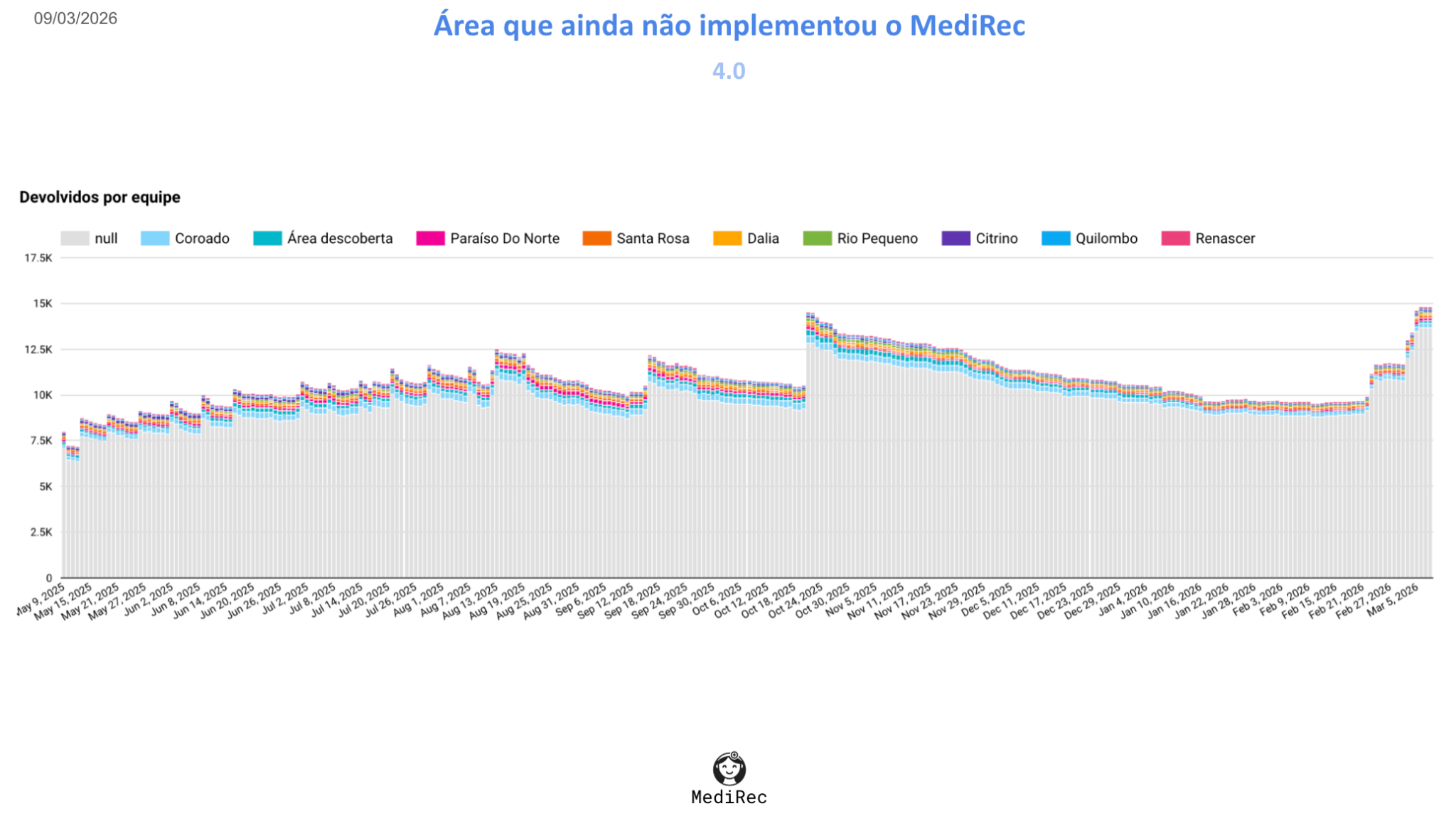
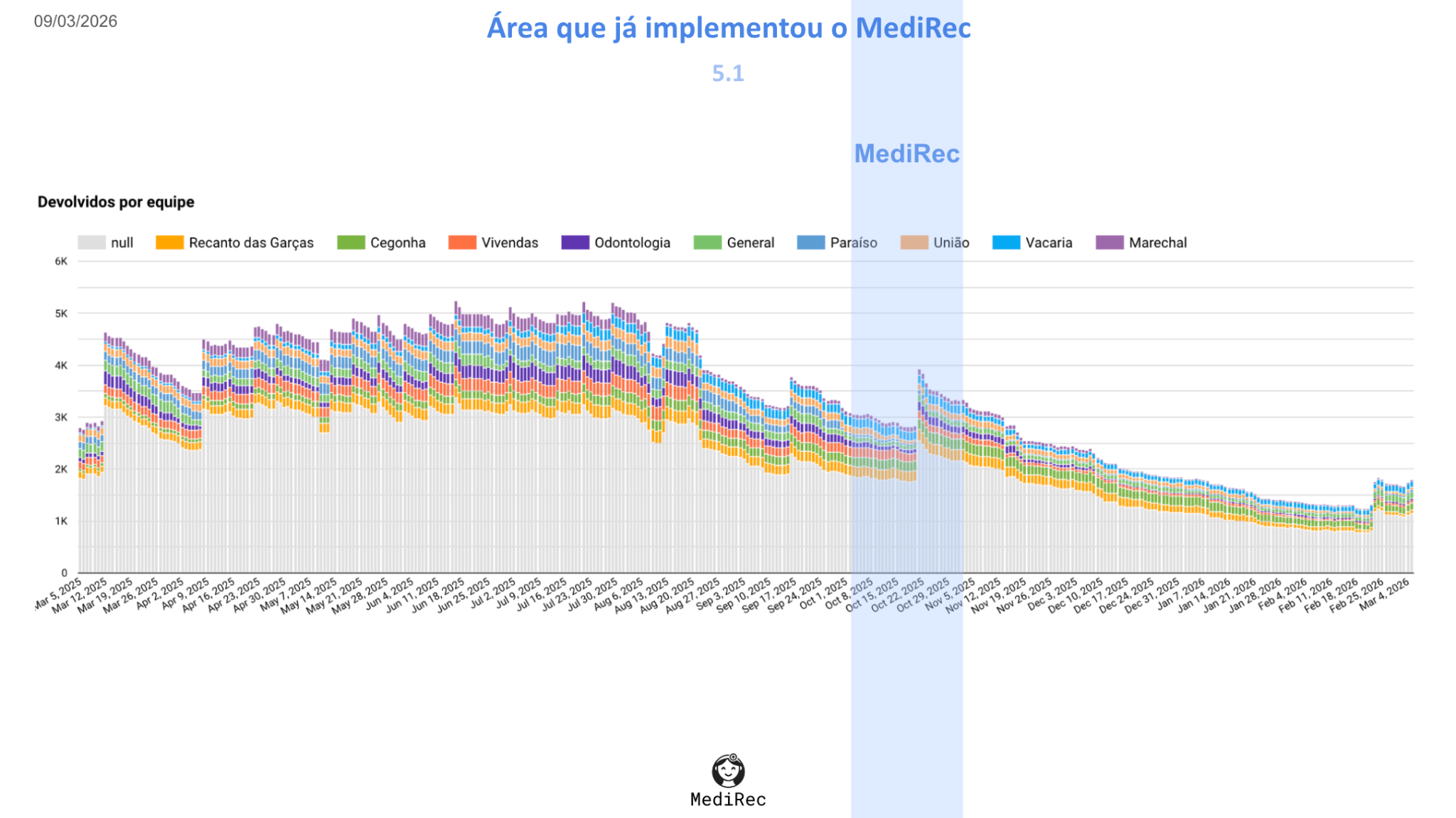
In the areas and facilities that adopted the returned-referrals module, an approximately 65% reduction was observed in the accumulated backlog of returned referrals.
This result is enabled by three innovations: automating the filtering process by facility, team, and requester; notification and signaling mechanisms for returned referrals; and eliminating the phenomenon of ownerless returns.
Ownerless returns are returned requests submitted by professionals who no longer belong to the facility. Before MediRec, identifying these cases required a specific manual effort. MediRec automatically assigns these returns to the appropriate teams, integrating them into the normal handling workflow.
In the charts below, the gray color (null) represents ownerless returned referrals — that is, referrals that have not yet been assigned to any team.
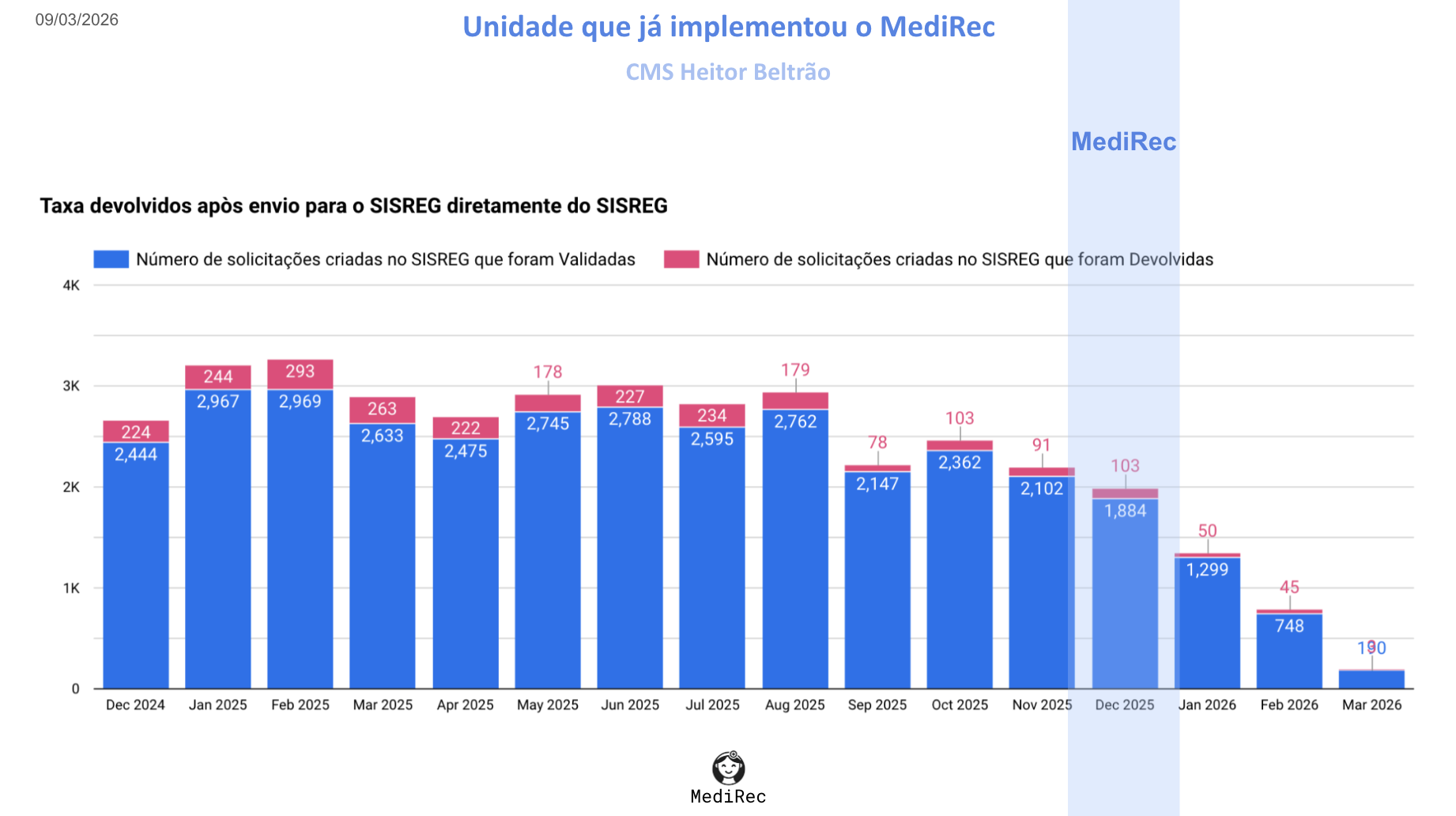
6. A drop of more than 50% in the return rate
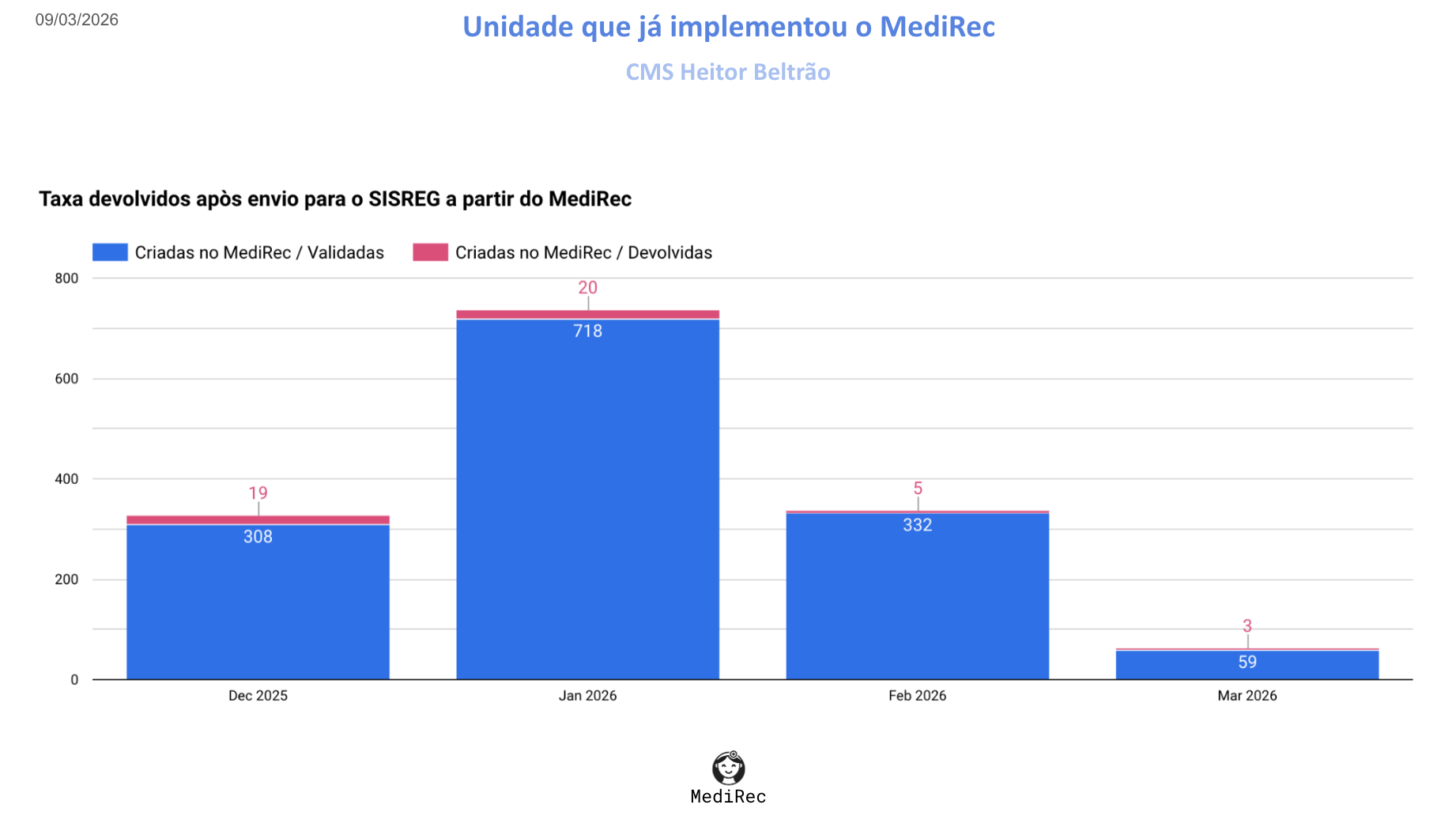
At the facilities that adopted the returned-referrals module, a significant reduction in the return rate is observed: from ~7% before implementation to ~3% after using the module — a decline of more than 50%, varying according to request volume and the facility's level of care pressure.
7. Organic growth
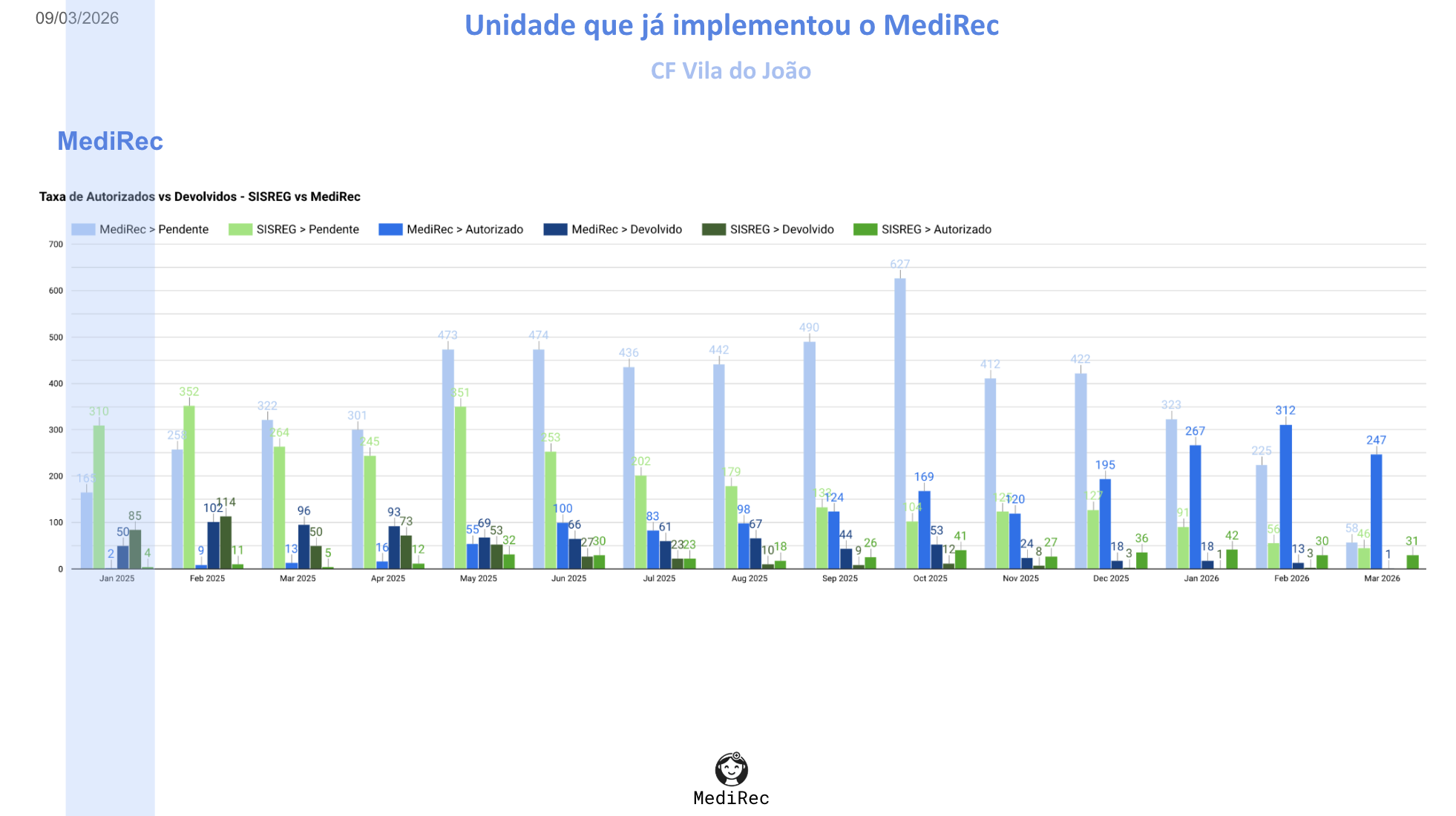
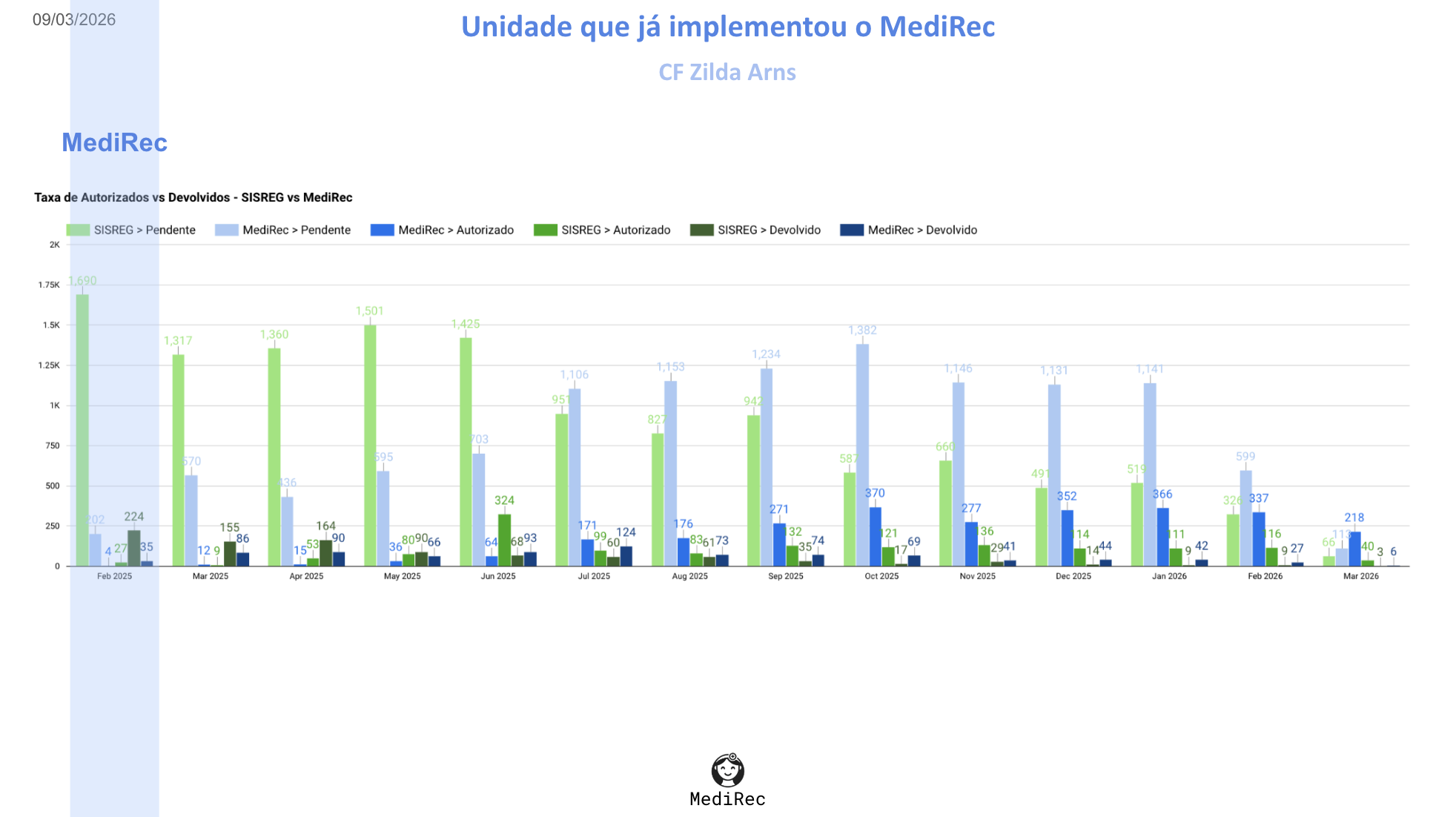
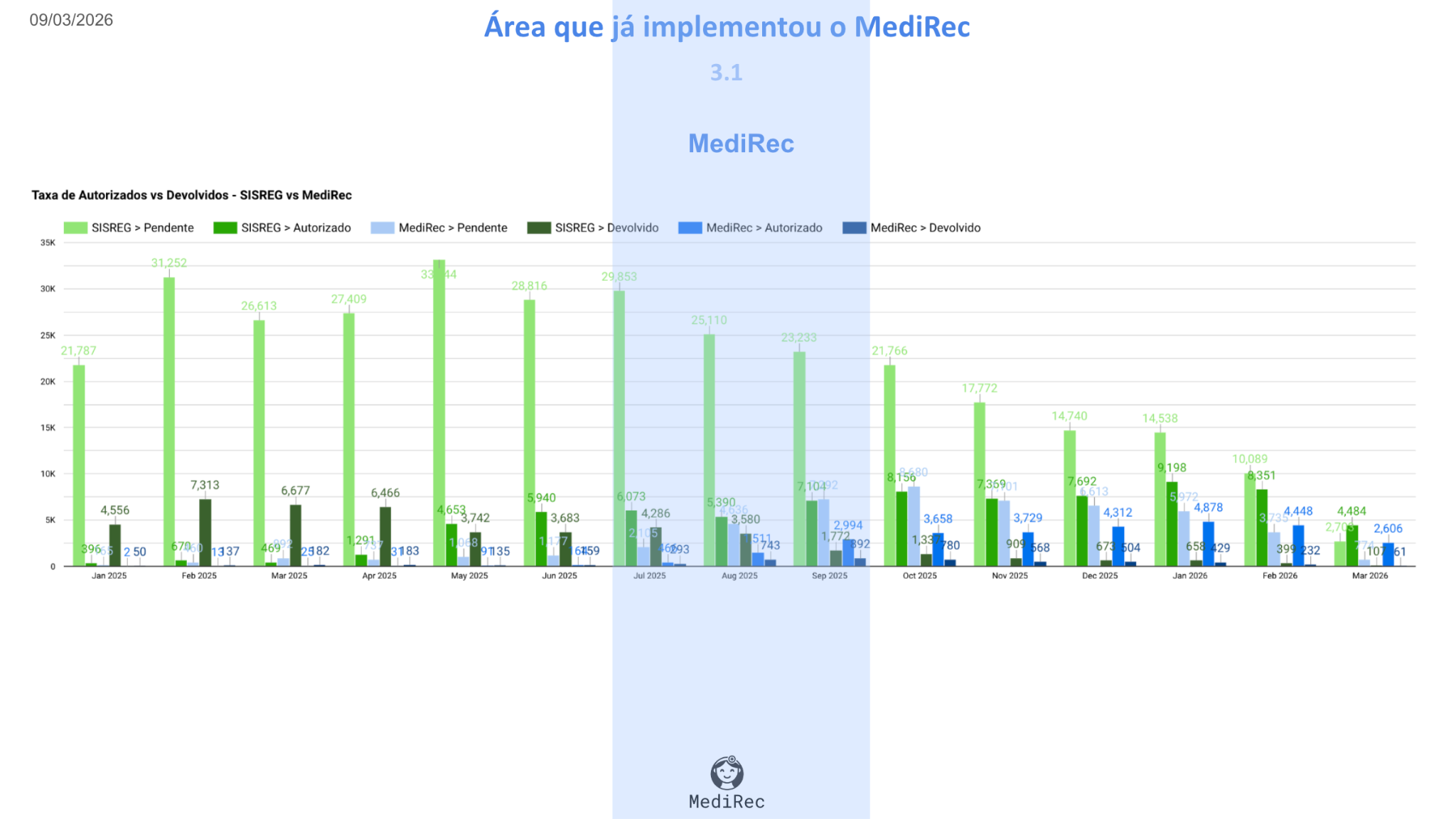
MediRec adoption follows a consistent and organic pattern. After the initial training, the facility's early adopters — generally the professionals who are more open to and familiar with technology — mobilize spontaneously and become the main users during the first three to four months.
Without the need for additional training, this period is followed by a gradual democratization of use. The milestone of this transition can be identified precisely: it is the moment when the volume of referrals submitted through MediRec exceeds the volume entered directly in SISREG. This transition phase lasts an average of three months, after which MediRec becomes the facility's main referral channel.
The success of this adoption process depends largely on the early identification of early adopters within each facility, as well as the active engagement of Medical Technical Leads, Facility Managers, and CAP Medical Technical Leads — key actors in legitimizing and disseminating the platform's use.
The following charts show the two facilities and the Planning Area with the longest period of MediRec use, illustrating this phenomenon. The columns in shades of green represent referrals submitted directly in SISREG; the columns in shades of blue represent referrals submitted through MediRec. In addition to the adoption curve, the charts show a relevant difference in the authorization rate: referrals submitted directly in SISREG have a less favorable ratio of pending to authorized requests, while referrals submitted through MediRec have a significantly higher proportion of authorizations. This suggests that the standardization and qualification of referrals promoted by MediRec contribute directly to better regulation-approval rates.
8. Conclusion
MediRec represents a structural change in how public health network facilities manage their access-regulation processes. The results presented in this document are not projections — they are measurable evidence gathered in the field, in the facilities and areas already operating the platform.
The savings of 8 to 12 hours per physician per week, the 65% reduction in the returned-referral backlog, the decline of more than 50% in the return rate, and the organic and sustainable growth in adoption form a consistent picture: MediRec does not merely automate tasks — it transforms teams' working culture, reduces administrative rework, and frees health professionals to focus on what truly matters, patient care.
The adoption curve observed in the pioneering facilities also demonstrates that the platform consolidates autonomously, without the need for continuous institutional pressure. Once the early adopters begin using it and the results become visible, democratization occurs naturally — and MediRec becomes the facility's preferred channel.
As the network expands its coverage, the gains multiply: more qualified referrals, a higher regulation-authorization rate, shorter patient waiting times, and more transparent, data-driven territorial management.